

Role
Senior Product Designer & Researcher
Timeline
December 2025 – February 2026
Team
Sr. Director of Design, PMs, and Engineering
Problem
TSIA members valued the research and insights, but struggled to connect engagement to business outcomes. That made renewal harder to justify and limited the platform’s strategic value.
My role
Led discovery, interaction design, prototyping, and validation. Partnered on a UX Canvas and object-oriented UX map to align business goals, user needs, and product strategy.
Outcome
Designed and validated a personalized Initiatives experience that helps members connect goals to relevant TSIA research and drives adoption.
Member feedback and internal research showed that, while TSIA's proprietary research was highly valued, members couldn't connect their engagement to real business outcomes. The platform felt more like a library than a strategic tool, making renewal a hard sell.
Members had difficulty demonstrating ROI, engagement was lower than it could be, and there was no clear link between platform activity and the strategic outcomes they were working toward.
How might we help members connect their TSIA engagement to measurable progress on business initiatives?
I partnered early on a UX Canvas and object-oriented UX map to align goals and strategy, then led discovery, design, prototyping, and validation.
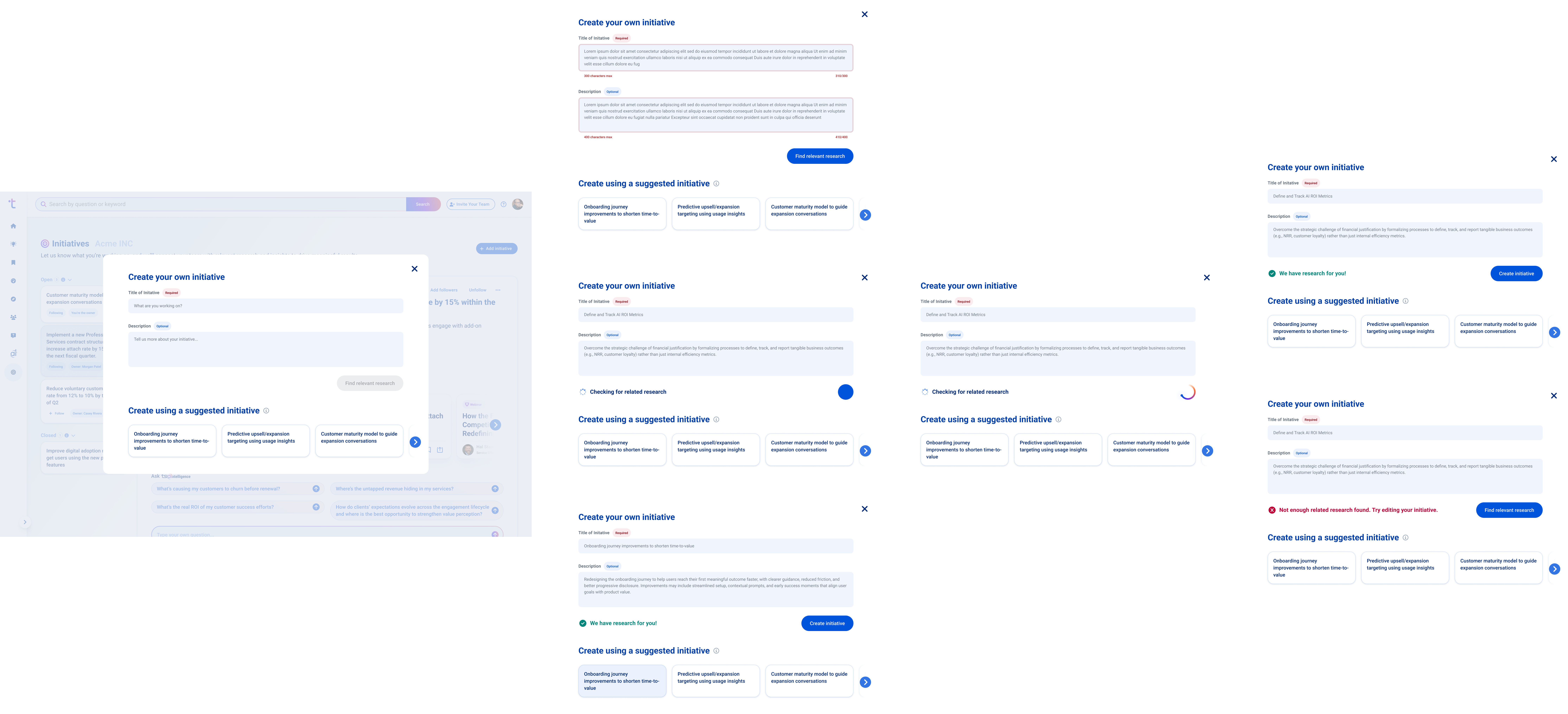
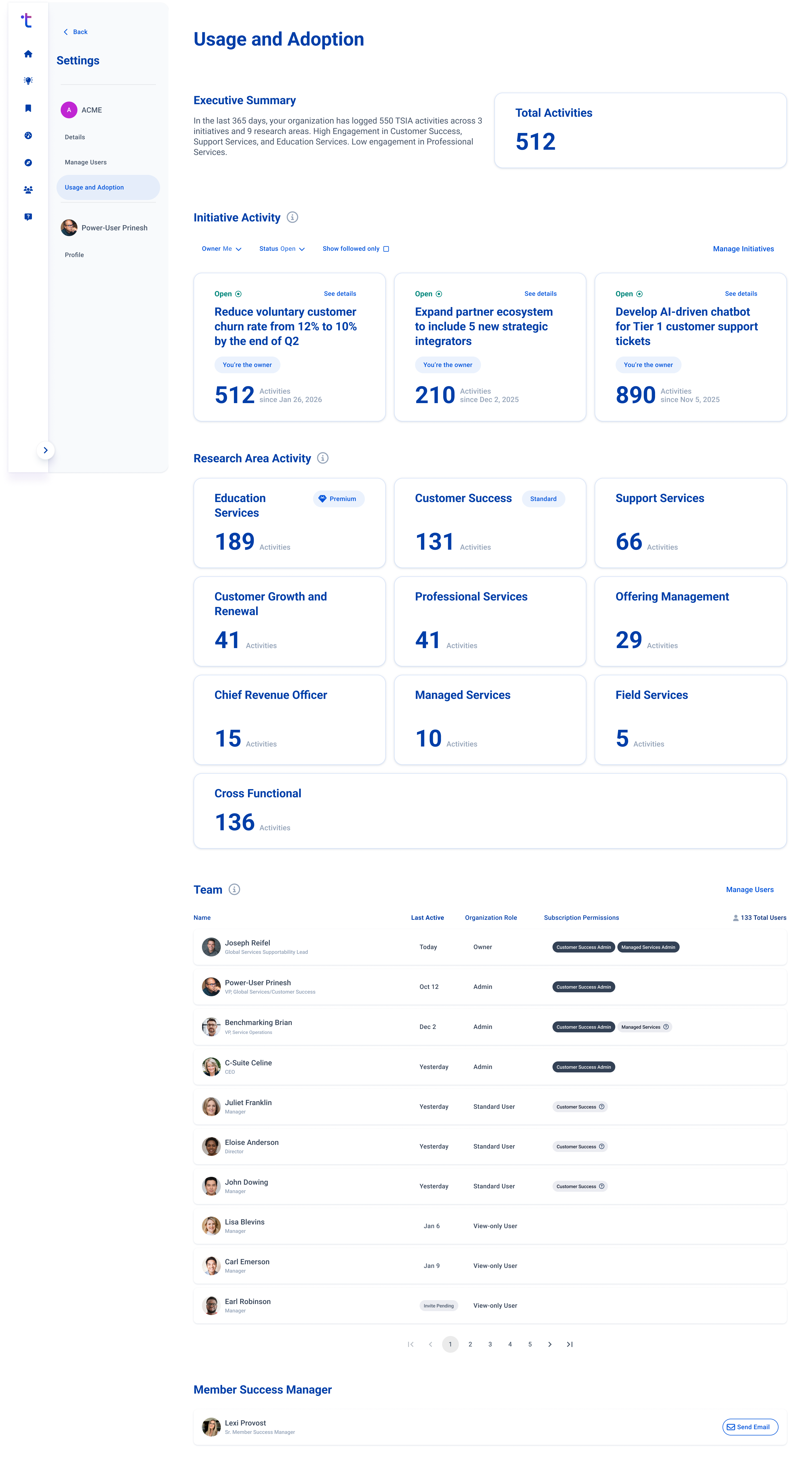
The experience let members define strategic goals, receive recommendations tied to those goals, and track engagement over time. I chose a two-column layout for discoverability and flexibility, but the harder questions were about meaning:
Throughout, I ran design reviews with Product and Design stakeholders to surface friction early and keep priorities aligned.


Before launch, I ran a moderated session with four members focusing on initiative comprehension and personalization.
The concept clicked immediately. No explanation needed.
Reduced the effort of finding content, which members valued most.
Members wanted benchmarking, not just activity tracking, to see progress against peers.
Confirmed the approach before launch, reducing risk going into build.
Found early enough to refine the experience before release.
Built confidence in the feature's ability to drive adoption and membership value.
The hardest part wasn't the UI. It was answering a more fundamental question: why should members use this, and what's in it for them? Getting clarity on that before designing anything was the most important work on this project.
The concept landed faster than I expected in research, which was exciting. It shifted the conversation from "does this make sense?" to "what else could it do?" Members wanted benchmarking data built in. "Am I moving faster or slower than my peers?" "What should I focus on next?" That's exactly where you want to be at the end of a validation study.

Next case study

