
Role
Senior Product Designer & Researcher
Timeline
September 2024 – April 2026
Team
Sr. Director of Design, Product Managers, and Software Engineers
Problem
TSIA members struggle to find relevant research in a growing content library, slowing business decisions.
My role
Led discovery, UX research, information architecture, interaction design, prototyping, and post-launch research. Partnered with the Senior Director of Design on visual design and product strategy.
Outcome
Launched TSIA's first AI products, enabling members to access trusted insights faster and increasing adoption and engagement.
TSIA's content was hard to navigate, so members spent too much time searching rather than acting. AI could deliver the right research quickly without risking trust in TSIA's expertise.
Phase 1
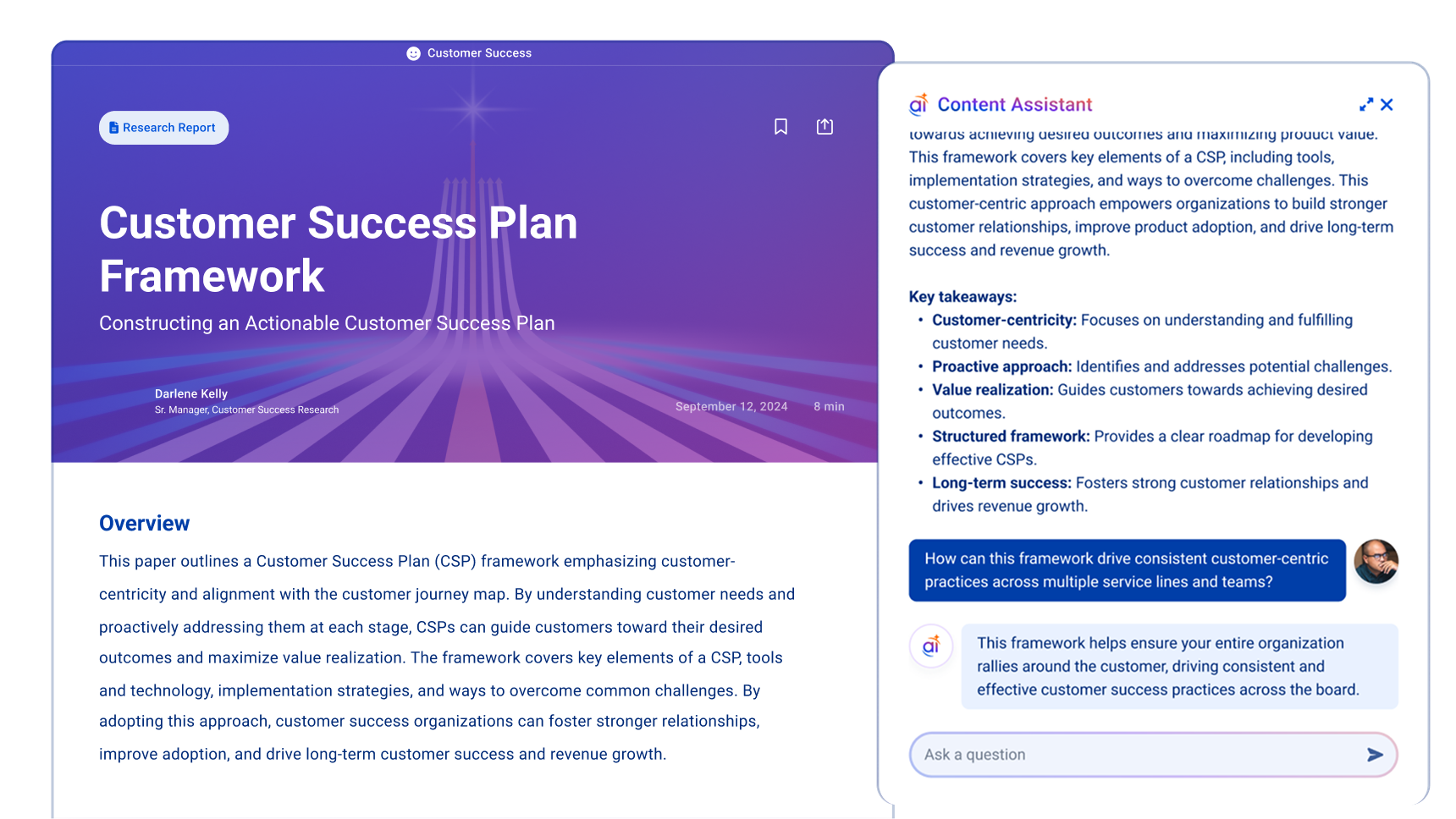
AI Content Assistant was TSIA's first AI-powered feature. I led UX research, competitor analysis, information architecture, user flows, wireframes, prototyping, and UI design. The goal was to help members get more out of individual pieces of content by summarizing research reports, webinar transcripts, and frameworks.
This phase established the core AI interaction patterns, trust mechanisms, and user expectations that carried into everything that followed.
Phase 2
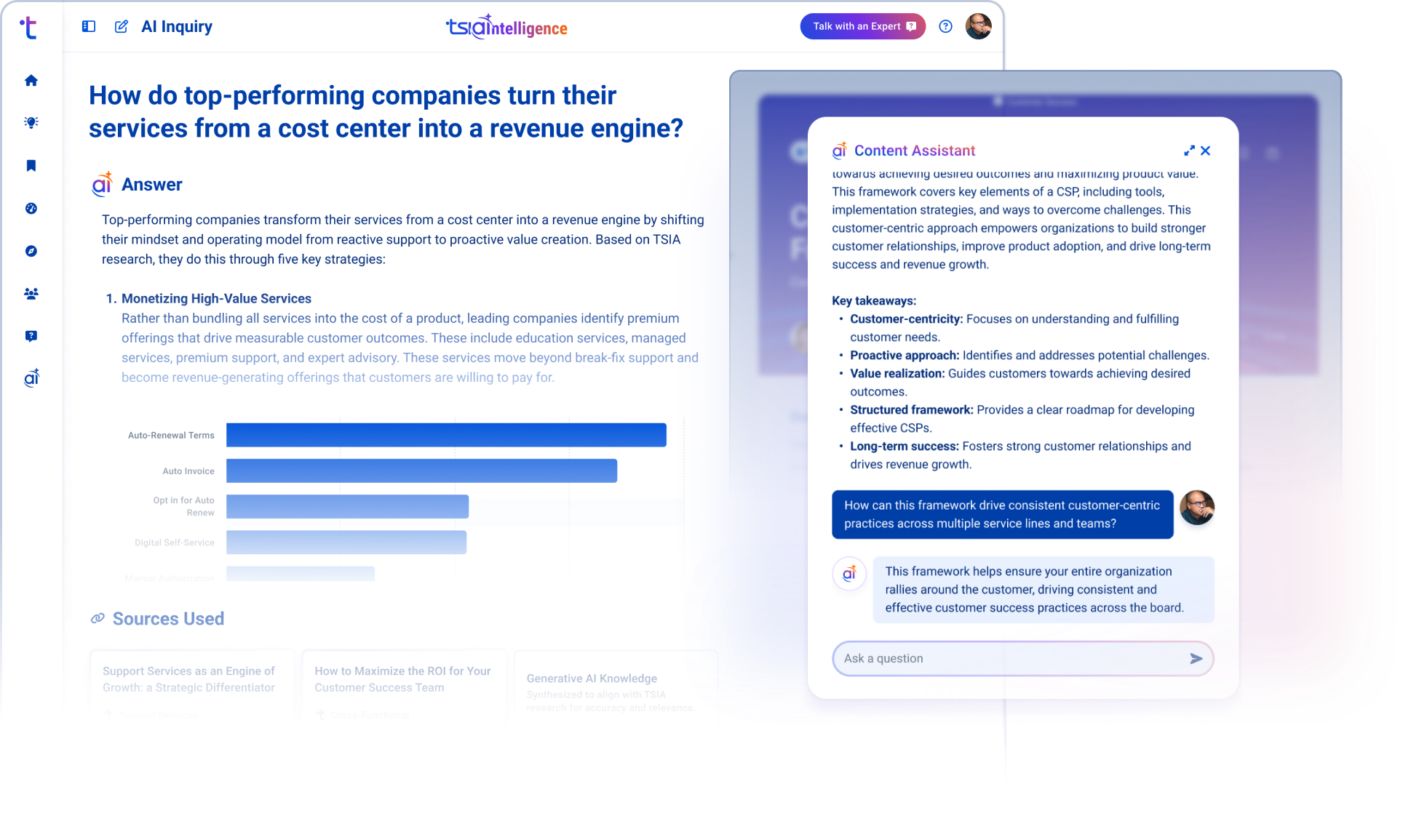
We expanded to AI Inquiry, helping members ask business questions in natural language and get answers grounded in TSIA research.
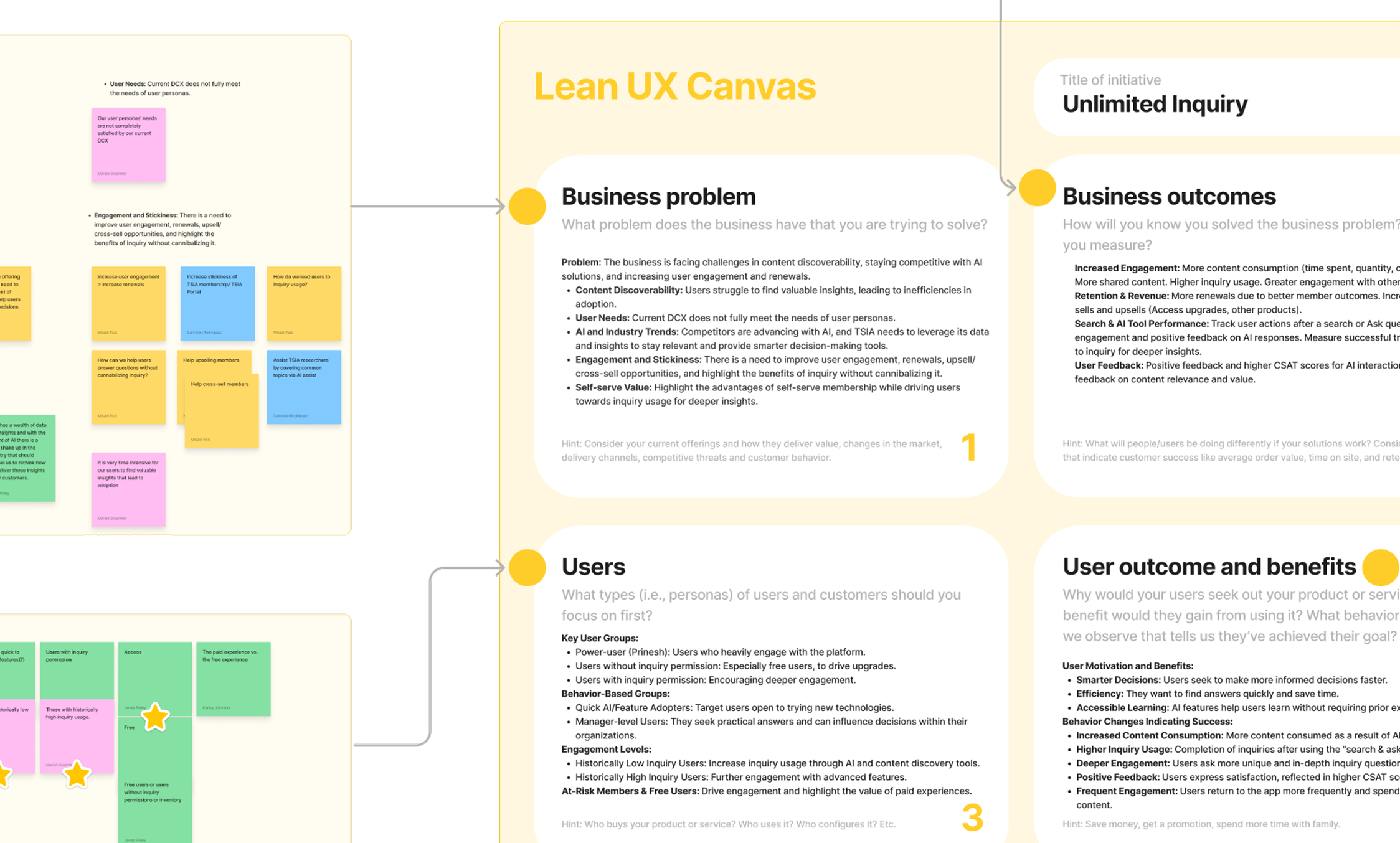
I led discovery in Lean UX workshops, then drove flows, interaction design, and prototyping.

Members needed confidence in AI answers. We added citations and links to TSIA research.
Grounding responses in TSIA expertise provided both convenience and reliability.
AI-powered search surfaced valuable research without members needing to know what to look for.

After launch, I ran mixed-methods research, analytics, surveys, interviews, and member call reviews to identify adoption opportunities and areas for improvement.
Key Research Findings
used AI Inquiry for strategic planning, showing strong alignment with high-value workflows.
Members trusted AI Inquiry more than ChatGPT because answers relied on TSIA's research.
used it as a backup tool, revealing an opportunity to make it the first stop for answers.
TSIA Intelligence grew from the first AI feature to the flagship AI experience, establishing the organization’s AI strategy and driving measurable adoption.
increase in activated users. 2,641 → 4,458 activated users (Oct 2025 – Apr 2026).
increase in weekly usage. 95 → 224 weekly questions from paid members after campaign launch.
of members used it for strategic planning.
Members already used AI tools but didn’t fully trust them. Grounding answers in TSIA research and making sources visible was the key to adoption.
Finding out that 46% of members used AI Inquiry as a backup tool, not a first stop, reframed how we thought about adoption. How do you shift behavior so members reach for this first? That's the next challenge.
Working on this project revealed to me that AI UX isn't just about the model. Transparency, presentation, confidence, and sourcing determine whether someone trusts it enough to act on it.
Next case study

